Advertising-Promotion

Love With a Chance of Drowning

7 May 2013

How much does a Pulitzer affect book sales?

5 May 2013

From The Christian Science Monitor:

It’s the gold standard, the highest honor, the single most important mark of excellence and prestige.

In the publishing world, there is no prize more coveted than the Pulitzer, a distinction that sets the cream of the book crop apart from the rest.

And with that distinction comes the so-called “Pulitzer bump,” a sharp increase in book sales that award winners and their publishers eagerly await.

. . . .

Two weeks after the 2013 Pulitzers were announced, all five winning books have, in fact, seen an increase in sales.

The numbers, however, are woefully underwhelming.

“Embers of War,” by Fredrik Logevall, saw 2013 sales increase from 40 (yes, you read that right) copies before the announcement to 353 after it, according to Nielsen BookScan and Publishers Weekly.

Sales of Tom Reiss’s “The Black Count,” inched up from 135 to 501 copies.

Sharon Old’s “Stag’s Leap” saw sales increase from 51 copies to 492.

Link to the rest at The Christian Science Monitor

Improving Book Publicity in the 21st Century

3 May 2013

From Cory Doctorow via Locus Online:

I’m not complaining when I say that YA book-tours are a death march. I relish the chance to go on the road, and I’m profoundly grateful to my publisher, Tor, for sending me out with my books – in February, I hit 23 cities in 25 days with my novel Homeland, and in most cities, I did multiple school presentations as well as press stops and then a public event, usually in the evening. All this is rather tiring, but it’s the exhaustion that comes from a job well done. Harder to deal with – for me, at least – is explaining to friends that while I’m coming to their hometowns for a visit, it’s a flying visit, skipping over the city’s surface like a spinning stone, lucky to come to rest long enough for a sit-down meal, let alone a proper round of socializing.

But a few lucky times, I was able to score a few free minutes for a meal or a conversation with friends, and the number-one-champion frequently-asked-question they asked me was, ‘‘How is the book doing?’’

The honest answer to this is, ‘‘We’ll know in two to six months.’’ I mean, yes, Homeland was on the NYT bestseller list for four weeks, on the Indiebound bestseller list for three, and still carries a satisfyingly high Amazon salesrank, but none of this tells you anything particularly useful. Indiebound and BookSense tell publishers a bit about where books are selling, but compared to Internet businesses, publishers are almost entirely in the dark about their books. Even e-book reporting is frustratingly opaque: e-book retailers know which sites refer customers to their purchase pages, know those readers’ demographics and other purchases, understand which search terms direct the most traffic, and which subset of those terms generates the most sales. Publishers get little to none of this data. If I was negotiating with Amazon, Apple, Google, and Kobo, my top request would be realtime access to anonymized aggregate data from these services.

. . . .

There’s the graphic novel series, now in up to something like 17 volumes. I’ve given every book a positive review, and all the new volumes have quotes from me on the cover. I never get review copies of this one – I don’t even get a notice from the PR department when a new volume is out. But the same PR department has sent me something like nine volumes of another series, none of which I’ve ever reviewed. If I don’t review book one, that means I either didn’t like it, or didn’t even bother with it because it looked so unpromising. Having skipped book one, you can be certain I won’t review book two. This same publisher sends me mountains of single-issue comics, even though I’venever reviewed one of those.

There are publishers who send me everything, mountains of books, none of them remotely appropriate to me.

Link to the rest at Locus Online and thanks to Alyssa for the tip.

Sleeping ad giant Amazon finally stirs

25 April 2013

From Reuters:

Amazon.com Inc is known in the advertising industry as the “sleeping giant” because the world’s largest Internet retailer harbors a trove of consumer-spending data that many marketers have called an unrealized opportunity.

Now it’s awakening to the potential. After running ads on its own website for years, the company has taken the first steps toward becoming a true Internet advertising network, using the knowledge garnered from its data to place targeted ads for some of the world’s biggest advertisers across thousands of other websites.

. . . .

For Amazon, an ad business is a new revenue stream with fatter margins than its retail operations. To Google, Facebook Inc and other online ad leaders, Amazon is a threat because it has data they lack.

Google knows what people are searching for. Facebook knows what people like and who their friends are. Amazon knows you searched last week for running shoes, but also that you bought a pair a year ago. That kind of information has advertisers salivating.

“In today’s marketing world, data is gold and Amazon is Fort Knox,” said Jeff Lanctot, chief media officer at digital ad agency Razorfish, which counts Mercedes Benz USA, Delta Air Lines and McDonald’s among its clients.

. . . .

Online advertising has 20 to 30 percent profit margins versus less than 5 percent for Amazon’s retail business, according to Ben Schachter, an analyst at Macquarie.

Link to the rest at Reuters and thanks to William for the tip.

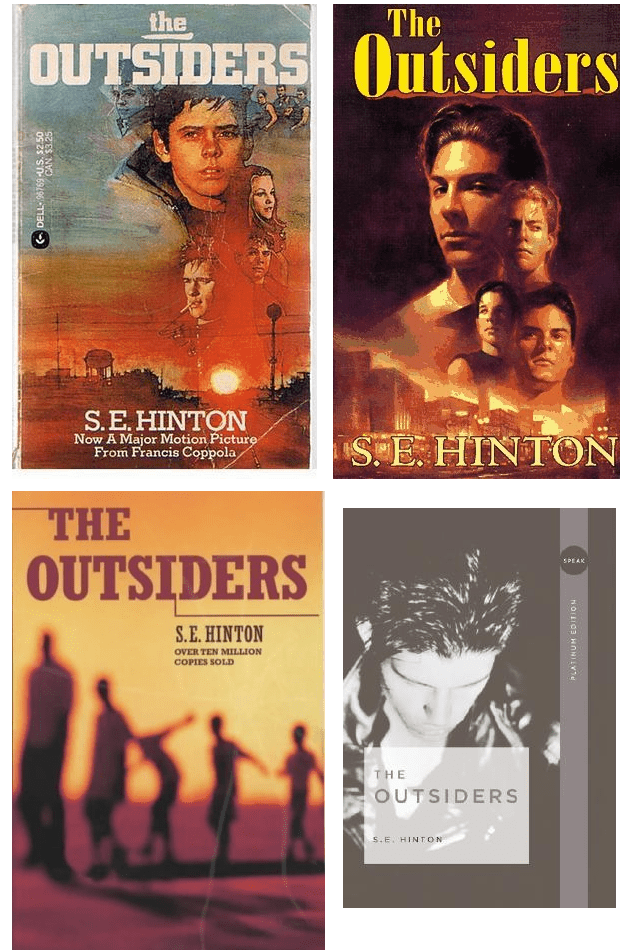
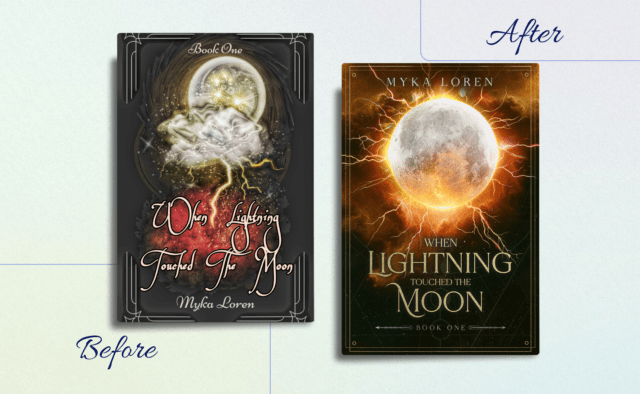
How Important Is eBook Cover Art in 2013?

23 April 2013

From Good Ereader:

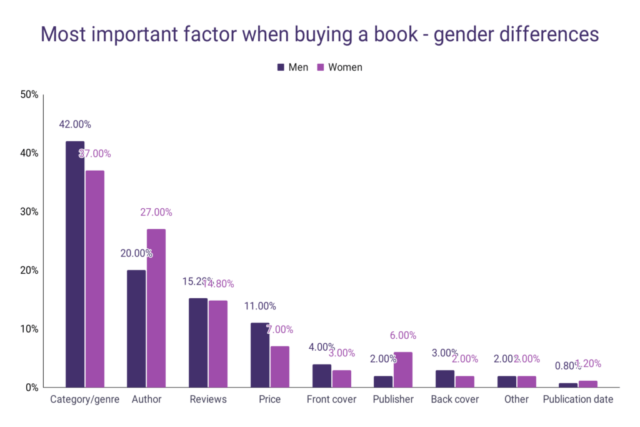
Traditional print book covers draw many parallels with billboards and conventional marketing to appeal to casual readers. When you walk into a bookstore and there are thousands of books present, they start to all blur together. Bright colorful images and racy cover art are increasingly becoming more bold to grab people’s attention and hopefully prompt an impulse buy. When indie authors self-publish and release digital firsts, how important is cover art? Weighing in on the issue are some of  the top digital publishing companies and best selling authors.

Self-Published authors are often on a shoestring budget, and competing against the big six publishers with really great art is a hard task. Contracting out the cover art, hiring models, and getting the fonts just right is often out of reach for your average indie author. If you are the type of person that loves doing everything yourself, Book Tango has an excellent DIY Cover Art Generator. Using the Online Cover Designer, you’ll be able to upload your own original image; plus you’ll have access to an ever-growing library of royalty-free images that you can choose from. Once you select your image, you’ll be able to place your book’s title, subtitle, and author name on your cover. You’ll be able to choose from a variety of font, color, and style options to make your text appear however you want. If you’re interested in more advanced cover design options, you can elect to purchase the Custom Cover Design.

Many indie authors often shrug off effective cover art, knowing that readers click on hyperlinks in the table of contents to automatically visit chapter one. Really, in the world of Soundcloud where people comment during the music tracks and .99 cent ebook purchases, is cover art relevant?

Kelly Gallagher from Bowker mentioned that “Consumers are still discovering e-books via non digital ways. They even cite seeing a book in store (especially children’s an YA) before they buy the digital version. In digital only, consumers still buy on impulse about 30% of the time. Less then print but still important when first impressions count.”

. . . .

“It’s key that authors and publishers get their covers right. Cover art is the first thing that a reader sees when browsing a collection digitally and it needs to be thought out in terms of how it looks on a thumbnail in addition to it’s full size. Readers do judge a book by its cover, especially in the digital space,” says Miral Sattar, founder and CEO of BiblioCrunch.

. . . .

One thing that I believe self-publishing has helped bring to the forefront for digital publishing has to do with flexibility and the awareness of such things as changing pricing and changing covers.  Indie authors were among the first to recognize that if a cover isn’t working in terms of drawing their target audience, they can change it.  It’s not as if the cover is locked on thousands of pre-printed stock sitting in a warehouse.  You upload a new cover and it’s done.  One common sentiment I hear from successful indie authors is that they pay close attention to the cover and will react to market circumstances and situations in order to maximize their chances of a customer doing that deeper drill into browsing their books. And a “better” cover isn’t necessarily better art for the cover, which is and will always be subjective, but art that closely matches whatever the target audience is expecting.

Link to the rest at Good Ereader

New Publisher Authors Trust: Themselves

17 April 2013

From The New York Times:

When the Pulitzer Prize-winning playwright and author David Mamet released his last book, “The Secret Knowledge: On the Dismantling of American Culture,” with the Sentinel publishing house in 2011, it sold well enough to make the New York Times best-seller list.

This year, when Mr. Mamet set out to publish his next one, a novella and two short stories about war, he decided to take a very different path: he will self-publish.

Mr. Mamet is taking advantage of a new service being offered by his literary agency, ICM Partners, as a way to assume more control over the way his book is promoted.

“Basically I am doing this because I am a curmudgeon,” Mr. Mamet said in a telephone interview, “and because publishing is like Hollywood — nobody ever does the marketing they promise.”

. . . .

Sloan Harris, co-director of ICM’s literary department, said his agency signed a deal with a company called Argo Navis Author Services, a self-publishing service created by the Perseus Book Group, because he decided it was time to give his clients more options than the standard big publishing houses.

For certain clients, Mr. Harris said, self-publishing “returns a degree of control to authors who have been frustrated about how their ideas for marketing and publicity fare at traditional publishers.” Both Mr. Harris and Mr. Mamet said that the big publishers focused mostly on blockbuster books and fell short on other titles — by publishing too few copies, for instance, or limiting advertising to only a short period after a book was released.

“Particularly for high-end literary fiction, their efforts too often have been very low-octane,” Mr. Harris said of the traditional publishers.

. . . .

 If an author self-publishes, what, then, is the role of a literary agency? Mr. Gottlieb of Trident said it made sense for his clients to self-publish through the agency, which charges a standard commission on sales, instead of going directly to Amazon themselves because the agency brought experience in marketing and jacket design. It also has relationships with the digital publishers that give their clients access to plum placement on sites that self-published authors can’t obtain on their own.

. . . .

 Argo Navis’s standard deal, for example, allows for publication digitally and in paperback by demand, as well as distribution, in return for 30 percent of all sales. (It would not be unusual, however, for a big author using an agent to negotiate better terms.) The deal also comes with basic marketing, like listings in digital catalogs.

Link to the rest at The New York Times and thanks to Robin for the tip.

Gaming the Amazon System

13 April 2013

From Crime Fiction Collective:

The newest trend I’ve noticed is the republishing of the same book. What I see happening is that familiar books that were competitive on Amazon’s crime fiction list, dropped off the list, then came roaring back with a new pub date and a high profile.

What’s the advantage in unpublishing an ebook and republishing it? If you price it at $.99 and list it on a bunch of promotional sites and newsletters—or do an Amazon giveaway—the book will jump in sales and get picked up by the algorithm. And because the publishing date is new, the book will likely get ranked in the “hot new releases” list…despite the fact that it was available for years and has a hundred reviews. The reviews stay attached to the print version (which stays published), then the author just emails Amazon and asks them to link the print version with the “new” ebook.

. . . .

The practice seems deceptive. We all have the ability to upload new versions of our stories at any time without unpublishing them, so there’s no good reason to click that unpublish button. (Or none that I can think of.) But in the digital world, unpublishing is just a matter of pausing, or taking the file off the market for a while, so in theory, you could keep your book “new” all the time.

Link to the rest at Crime Victim Collective and thanks to Kathryn for the tip.

7 Publishing Tips I Learned at Writer’s Digest Conference East 2013

10 April 2013

From author James Duncan:

I recently attended Writer’s Digest Conference East in New York City — my first writing conference in almost seven years — and aside from the standard (though invaluable) advice on craft, career, and publishing options for writers, I picked up these seven tidbits of info that I found especially fascinating.

. . . .

3. Blog to Website: Despite their wide use by industry professionals and writers, many blogs and websites that have the tags .blogspot and .wordpress retain a slight stigma as being “less professional” than a website. So the $10 a year (or so) that these sites charge to turn it into a strictly .com operation is well worth the money to dispel any doubt that you are taking this seriously. It’s on my 2013 To Do list for sure.

4. Output: I learned that Erle Stanley Gardner, the creator of the Perry Mason mysteries and a prolific pulp novelist in the 30s, had a personal goal of writing 66,000 words per week . . . PER WEEK. That’s impressive, and he hit that regularly. I’ll try to keep that in mind when I feel like slacking.

Link to the rest at James Duncan

Indie Author Branding: How to Figure Out How to Brand Yourself

1 April 2013

From author Elizabeth Barone:

It took me about a year to figure out how to brand myself as an author. This was after I decided to be a professional novelist. Before I figured it out, I worried about it almost all the time. After all, I used to work with non-profits and small businesses to create their web presence—a form of branding. I couldn’t figure out how to translate those principles to my own company.

. . . .

The only thing I had going for me was a website: elizabethbarone.net. While I really would have preferred the .com, I made this place my home base for my books, news, and blog not long after deciding to work toward being a full-time author. I did very little to brand it, other than experiment with WordPress themes, and play with headers in Photoshop.

Then I stumbled upon an interview Joanna Penn did with CJ Lyons, who calls her books “thrillers with heart.” I liked the term immediately because it not only perfectly described her books, but gave her room to write in all genres. If she wanted to, she could even write horror under that term, as long as there was some heart in it. That got my wheels turning and then branding made sense to me. I didn’t have to pick a genre. I could write “drama with grit”:

stories powered by strong, intricate characters who are plagued by realistic problems and situations.

. . . .

Author Eric Dontigney summed up how an author can brand themselves:

You can’t really brand yourself as “the horror guy,” because Poe tops that list and Stephen King has a lock on that broad category for the foreseeable future. You might, however, be able to lock in a brand as the noir-horror guy or rampant technology horror guy. Narrowing down gives you a specific hook that readers can grab.

Link to the rest at Elizabeth Barone

Book Discovery and Blind Dates

25 March 2013

From Publishing Perspectives:

“Selling books to buyers that you already know they will like, they will find those books on their own. The point of book discovery is selling someone a book that that didn’t know they were already going to like.”

. . . .

In truth, book discovery works a lot like blind dates. How often have you been told by a friend, “I am going to set you up with someone that is really perfect for you?” And how often does that introduction end, at best in mild disappointment, and at worst a total disaster that makes you wonder exactly how desperate your friend thinks you are?

At the same time, you do often do you find that, no, it’s not the person your friend set you up with on that date that you’re attracted to but the person sitting next to them at the dinner party — maybe it’s the host, their mutual friend, etc.

Link to the rest at Publishing Perspectives

Next Page »

Page optimized by WP Minify WordPress Plugin